

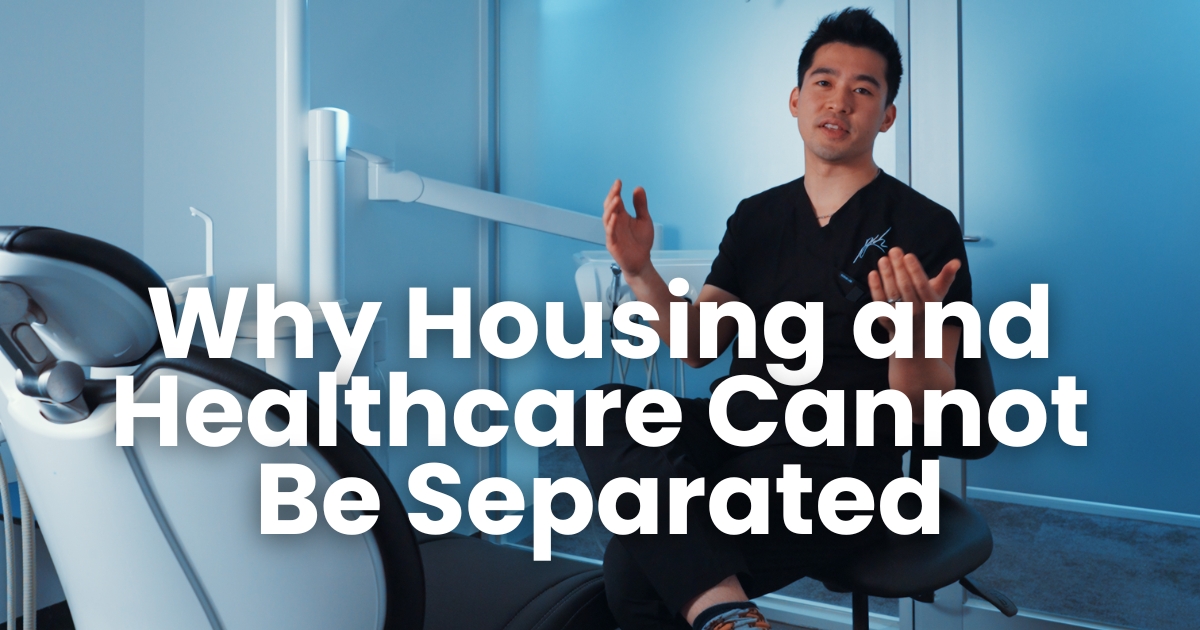
Value Dental Centres Speaks with Launch Housing About Homelessness, Health and the Importance of a Safe Home.
That is why, this year, Value Dental Centres donated $20,000 to Launch Housing, an independent community housing and homelessness organisation in Melbourne, Victoria, who help support people experiencing homelessness.
We wanted to better understand the connection between homelessness and health, and the difference this support can make. To learn more, we spoke with Melinda Wagner, Executive General Manager, Homelessness Outcomes, Health & Wellbeing at Launch Housing.
With more than 25 years of experience across the homelessness, housing and justice sectors, Melinda has worked in frontline intake, case management and outreach before moving into leadership roles supporting homelessness and health programs.
Today, she leads a team bringing healthcare directly to people experiencing homelessness, including street outreach nurses, community nurses and partnerships with hospitals such as the Royal Women’s Hospital and St Vincent’s Hospital Melbourne.
Homelessness Doesn’t Always Look The Way We Imagine
When people hear the word “homelessness”, they may picture someone sleeping on the street.
But as Melinda explains, most homelessness is hidden.
It can be a young person couch surfing after leaving a violent home, a family living in a motel room, or an older woman sleeping in her car.
Launch Housing is also seeing a change in who is seeking support.
Families who have never needed assistance before are increasingly being pushed into homelessness by family violence, rising rents and cost-of-living pressures. More older women are experiencing homelessness, while more people are presenting with complex health needs.
Having a job no longer guarantees someone a secure home.
For many people, homelessness can happen following a combination of circumstances such as violence, illness, relationship breakdown, job loss, rising housing costs or a lack of affordable housing.

Homelessness is a Health Emergency
People experiencing homelessness can die years earlier than the general population from health conditions that are often preventable or treatable. One Melbourne study found people experiencing homelessness die around 10 years earlier than the general population. For people sleeping rough, the gap is even starker, a 2024 Guardian Australia investigation found an average age of death of just 44, more than 30 years early.
As Melinda explains, poor health can be both a cause and a consequence of homelessness.
Without stable housing, it can become extremely difficult to manage a health condition. At the same time, deteriorating physical or mental health can make it harder for someone to find and maintain stable housing.
It becomes a cycle that is difficult to break.


— Melinda Wagner, Launch Housing.
The Barriers to Everyday Healthcare
Sleeping rough can have an immediate impact on physical health.
Broken sleep, exposure to cold and wet weather, poor nutrition, violence and injury can all take a toll. A relatively minor problem such as a wound or infection can become much more serious when someone cannot properly clean, rest or recover.
Temporary accommodation can create different challenges.
People may lose contact with their GP, medical records, or prescriptions. They may not have somewhere safe to store medication or recover after treatment. Appointment reminders may be sent to an address they no longer live at.
So chronic conditions like diabetes, heart disease, and respiratory illness go unmanaged. By the time people reach Launch Housing, what should have been routine care has often become complex and urgent.

Meeting People Where They Are
One of the ways Launch Housing addresses these barriers is by bringing healthcare directly to people where they are.
Launch Housing’s community health nurses work across crisis accommodation and community housing programs, providing health assessments, helping people manage chronic conditions, supporting access to medications and connecting people with GPs and specialists.
At their Southbank crisis accommodation, nurses operate a clinic Monday to Friday. In the last year, the Southbank nursing team provided 2,338 instances of support to 215 clients. Their on-site response helped avoid 22 ambulance callouts, while the team also responded to critical incidents and acute injuries and health events.
At Elizabeth Street Common Ground, Launch Housing delivered 1,620 on-site health interventions. When healthcare is available where people already are, health issues can be identified and managed earlier, before they become emergencies.
“The difference is timing. When care is right there, illnesses are picked up earlier and managed before they become life-threatening.”
— Melinda Wagner, Launch Housing
The Importance of Feeling Safe and Supported
Access to a healthcare service is only one part of the equation.
Many people experiencing homelessness have previously experienced trauma, discrimination, or difficult interactions with services. After being judged or turned away, it can understandably become difficult to trust another service.
Launch Housing takes a trauma-informed and non-judgmental approach, meeting people where they are and allowing them to set the pace.
Building that trust can take time.
That is why continuity of care matters. When programs lose funding, it is not only a service that can disappear. Relationships that may have taken months or years to build can also be lost.

The Link Between Family Violence and Homelessness
Family and domestic violence is closely connected to homelessness, particularly for women and children.
Women escaping violence may leave behind their home, community, GP, medical history and established support networks.
Launch Housing works to provide safe housing alongside health and family support.
Programs such as Viv’s Place provide long-term housing for women and children escaping family violence, while the Cornelia Program, delivered in partnership with Housing First and the Royal Women’s Hospital, provides supported housing and maternal and child health care for mothers and babies.
This integrated approach recognises that housing, safety and health are not separate issues.
“Nearly half of the women seeking homelessness support tell us violence was a factor. In Melbourne, the share of households reporting family violence at their first presentation doubled between 2014 and 2020, from 7.5% to 15.8%.”
— Melinda Wagner, Launch Housing

The Growing Risk of Homelessness for Older Women
Launch Housing is also seeing increasing numbers of women over 55 experiencing homelessness.
Many older women reach their late 50s and 60s with far less financial security than they expected. Years of lower pay, time out of work caring for children or parents, and smaller superannuation balances leave little buffer. Then a relationship ends, a partner dies, or the rent goes up, and a woman who has never needed help is suddenly at risk.
And because many older women may be staying with friends, house-sitting or sleeping in their cars, their homelessness can remain hidden.
Health can be particularly difficult to manage in these circumstances, especially when someone is already living with chronic conditions or has missed routine health checks.

Rethinking What Homelessness Looks Like
There are many misconceptions about homelessness. One of the biggest is that homelessness only means sleeping on the street. Another is that homelessness is primarily the result of individual choices.
In reality, homelessness can result from a combination of circumstances, including family violence, illness, job loss, rising rents and a shortage of affordable housing.
It can happen to people who have never previously needed support. Most importantly, homelessness is not inevitable.
Launch Housing’s experience shows that when people are provided with housing that meets their needs, alongside appropriate support for their health and wellbeing, they can sustain that housing.
Last year, Launch Housing helped 3,838 people into housing, including 138 people who had been sleeping rough. Across its properties, 80% of households sustained their tenancies for 12 months or more.
Why Housing Is Essential to Long-Term Wellbeing
One of the clearest messages from our conversation with Melinda was that housing and healthcare cannot be treated as separate issues.
For someone experiencing homelessness, having a safe and stable home can provide the foundation needed to rebuild other parts of their life. It creates somewhere to sleep, stay warm, prepare food, store belongings and medication, receive important correspondence and begin to regain stability.
“I once thought of housing as one thing and healthcare as another. It didn’t take long to see that a home is where health starts. It’s where you can stay warm and safe, sleep and eat properly, store your medication, get your mail and manage your appointments.”
— Melinda Wagner, Launch Housing
Launch Housing’s experience demonstrates what can happen when housing and support are delivered together. Its Better Health and Housing Program, for example, has seen 74% of residents with a planned exit report better management of their health.
But the impact goes beyond individual outcomes. When people have the stability and support they need to remain housed, they have a stronger foundation from which to rebuild their lives.
Launch Housing’s goal is for homelessness to become rare, brief and non-recurring. Achieving that requires more than providing a place to sleep. It requires a coordinated approach that recognises the many challenges people may be facing and provides the support needed to move forward.

How Our Donation Is Helping Support Launch Housing
Our $20,000 donation to Launch Housing is helping support programs including community health nursing, which currently relies on philanthropic funding to operate.
This means supporting nurses who can be present at places such as Launch Housing’s Southbank crisis accommodation, helping identify health issues early and supporting people to access the care they need.
For Value Dental Centres, this connection between healthcare and homelessness was particularly important.
We know that healthcare is not simply about treating a problem when someone walks through a clinic door. Access, trust, prevention, continuity of care and the circumstances people live in can all influence their health.
As Melinda explains, philanthropic support also allows Launch Housing to trial and demonstrate approaches that can potentially be adopted and funded more broadly.
“Philanthropy helps us prove what works, so we can make the case for government to fund it at scale.”
— Melinda Wagner, Launch Housing
We are proud that our donation can contribute to this work and help support healthcare being brought directly to people experiencing homelessness.
How We Can All Make a Difference
Behind every statistic is a person.
A person who may have lost their home after years of financial pressure. A woman who left an unsafe relationship with nowhere else to go. A family trying to keep going after circumstances change beyond their control. An older person who never imagined they would one day be sleeping in their car.
Homelessness can feel like a distant issue until we remember that it can happen to people in our own communities, and that behind every experience of homelessness is a person with a story, a history, and a future.
What stood out to us through our conversations with Launch Housing is that homelessness is not hopeless. With the right support, people can find stability, rebuild their lives, and move forward.
That is why we are proud to support Launch Housing and to use our platform to help share their story. For us, supporting our community is more than just making a donation. It is about helping start conversations, challenging misconceptions, and encouraging more people to understand the realities of homelessness.
There is no single organisation that can end homelessness alone. It takes government, businesses, community organisations and individuals working together, each contributing in different ways.
Whether that means donating, volunteering, offering professional skills, supporting advocacy, or simply changing the way we talk about homelessness, every contribution can help.
Most importantly, we can choose to see the person before the circumstance.
We are incredibly grateful to Melinda and the Launch Housing team for sharing their experiences and for the work they do every day to help people find safety, stability and a place to call home.
Homelessness can end. And when we work together, we can be part of making that happen.

Learn More About Launch Housing
Launch Housing is an independent community housing and homelessness organisation working to end homelessness. Last year, Launch Housing supported more than 14,000 people through housing and support services.
To learn more about Launch Housing and the work they do, visit their website or explore their available resources and opportunities to get involved.
